


I’m sure you have seen that tariffs have been announced and the markets are reacting. 1 (NY Times)
I’m also confident in knowing a lot of the clients I work with are already seasoned and, through mutual work, have become disciplined investors. We understand that the market will go up. We understand that markets will go down. It’s a feature of wealth management, not a bug.
I want to address 4 things:
1. What happened?
2. What’s the reaction?
3. What does it mean going forward?
4. How to invest today?
First: what happened?
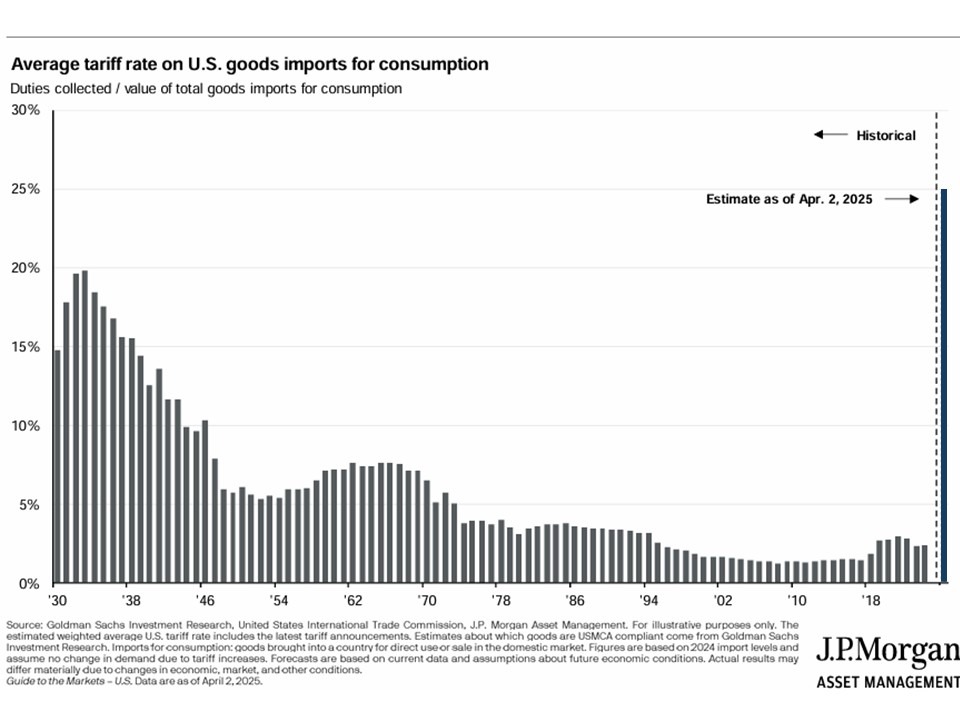
Along with the campaign promises to increase US-based economic activity, President Trump notably levied “reciprocal” tariffs of +10% on April 2nd on more than 90 countries, excluding Canada and Mexico. Paired with the Tariffs are “reciprocal tariffs” intended to target trading partners who have existing tariffs against the US. 2 (CBS News)
The tariffs are aiming to make US trade “more fair”. April 2nd was coined “Liberation Day”. 3 (NY Times)
The tariffs are “reciprocal”. This means if a country levies tariffs on the US, the US will levy tariffs back on them. As you may have noticed in the Reciprocal Tariffs image, the US reciprocal tariff is lower than the tariffs already charged against the US.
The tariffs will affect products like iPhones, TVs, cars, clothes, wine, and furniture, but hopefully they won’t tariff my favorite imports, Bluey & Bingo.
Next: what has been the reaction?
How has this affected the markets? In a word: volatility.
Volatility is the ups and downs in the market. We see ups and downs regularly.
As a result of the tariffs, we have seen a sharp sell-off across stock markets from around the world. Some of the hardest hit are small domestic small-cap stocks and the “magnificent seven” stocks.
We are seeing spikes in market volatility right now:
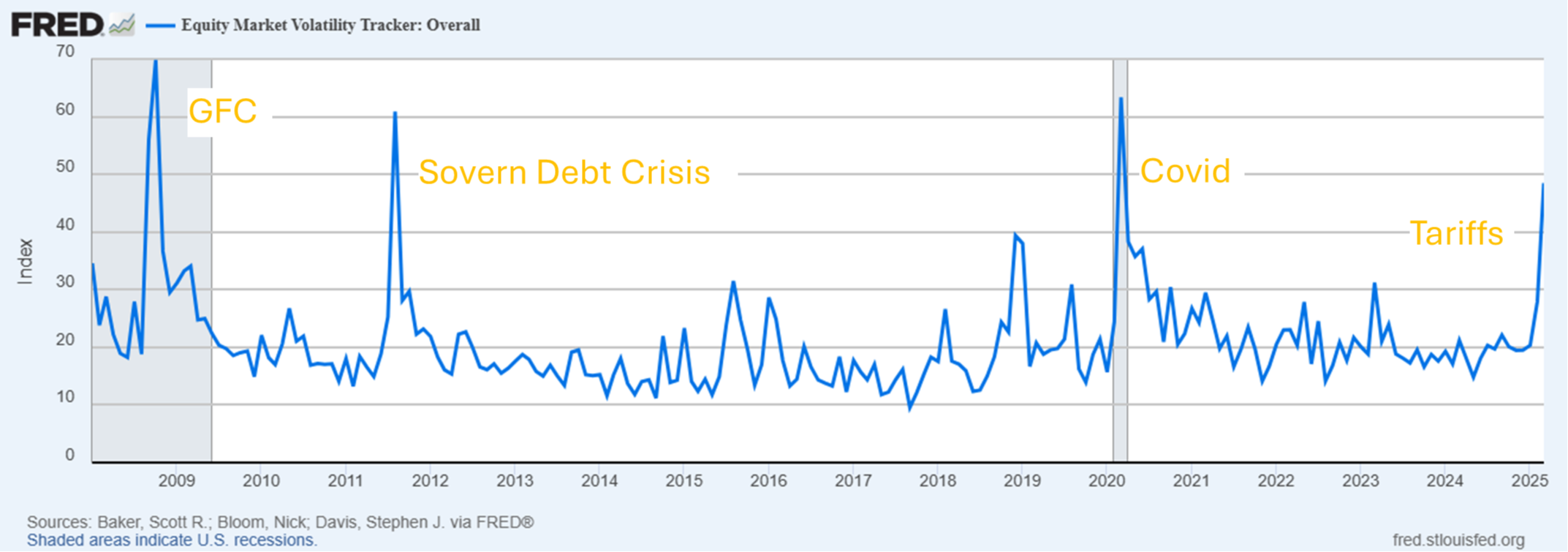
https://fred.stlouisfed.org/series/EMVOVERALLEMV 4 St Louis Fed
Because of the higher cost of transacting, businesses are likely going to raise prices. That means stuff is going to get more expensive, which is what we call inflation. Companies are going to price in their increased cost of doing business, which will have a combination of lower earnings and inflation in the short term.
How long will it last? No one would know for sure.
What we don’t expect to see are many countries continuing a tariff duel tit for tat.
Now: what does this mean going forward?
Market volatility can feel unsettling—especially when paired with economic uncertainty. It’s completely natural to feel uneasy when the headlines take a negative turn.
While none of us can predict exactly what comes next, here’s what I do know: reacting emotionally to market swings can often lead to missed opportunities.
If recent news has you feeling concerned, let’s talk. I’m here to be your guide, your thinking partner, and a steady source of perspective through it all.
This is why we planned for safety in portfolios.
Our long-lasting hold to diversification has paid off thus far.
So then: How should I invest today?
For our current clients: Your investment strategy was designed to go through market volatility and fluctuations.
Many of our clients have built-in so called “safety nets” within their portfolio that minimize the risk of stock market drops.
Many of our clients already have hedges on equities that help protect or have buffers against some market loss.
Many of our clients have diversified portfolios… and in some client reviews, we are talking about how their portfolios are still positive because of the diversification that was implemented.
I’m not saying we are immune to market adjustments, but know that my team and I are tracking market developments and carefully consider the feelings we have in investing when portfolios are made.
For those who are not (yet) our clients: we often have discussions on volatility control. Investments such as “safety nets”, and in our process of implementation might help lighten the burden of market loss.
As investment professionals, give us a call.
If you have any questions about how your portfolio should change or about the market in general, we encourage you to reach out.
- https://www.nytimes.com/2025/04/02/business/economy/trump-tariffs.html?searchResultPosition=2
- https://www.nytimes.com/live/2025/04/03/business/trump-tariffs#lists-of-tariffs-issued-by-the-white-house-show-two-different-figures-for-some-countries
- https://www.cbsnews.com/news/trump-reciprocal-tariffs-liberation-day-list/
- https://fred.stlouisfed.org/series/EMVOVERALLEMV